Gradia Militaria
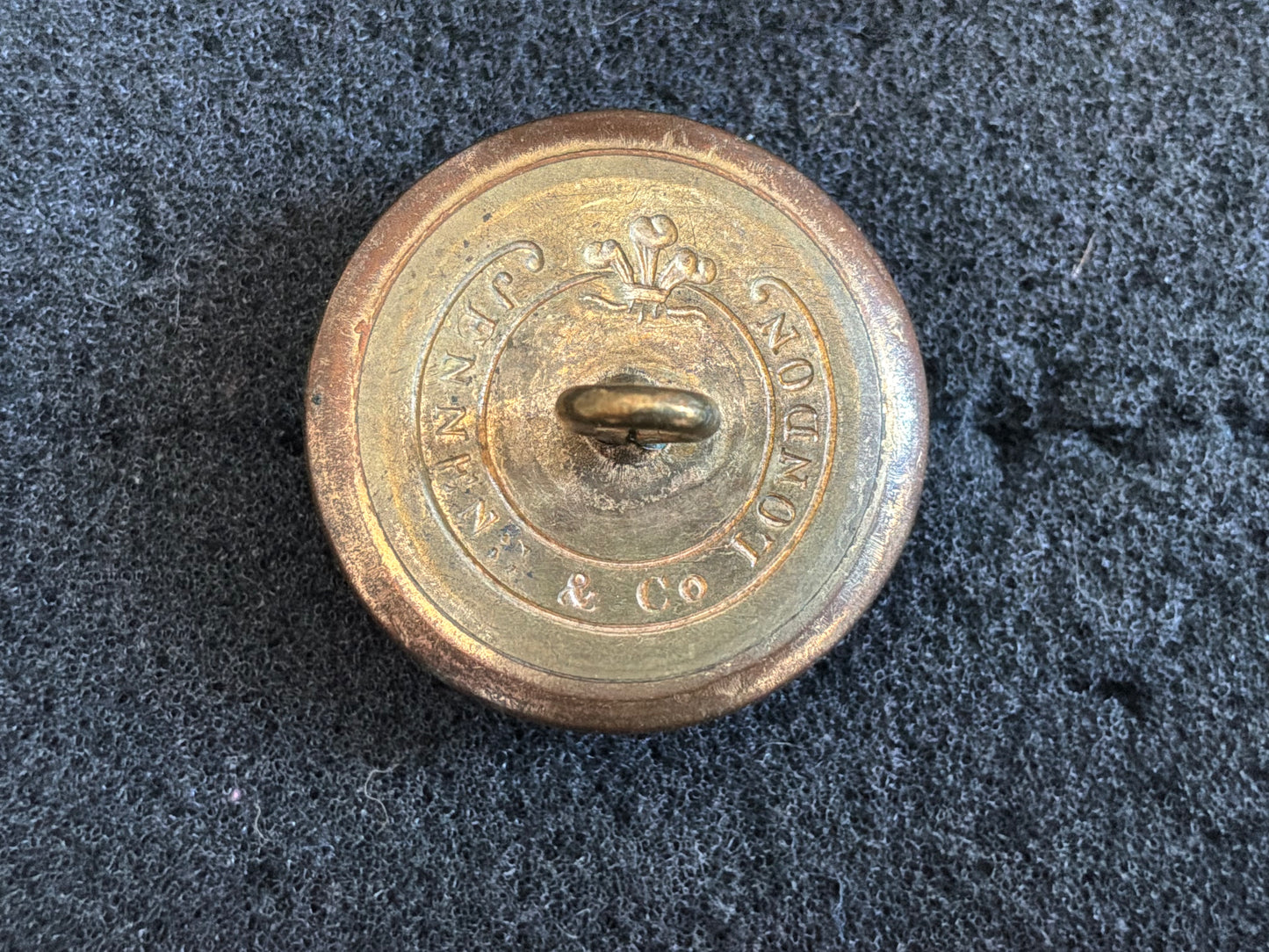
16th (Bedfordshire ) Regiment of foot large 25mm button.
16th (Bedfordshire ) Regiment of foot large 25mm button.
SKU:13.4.26 (19)
Couldn't load pickup availability
The 16th Regiment of Foot: A Life Well Lived
Few regiments of the British Army had such an eventful birth. In October 1688, William of Orange was about to set sail from the Netherlands to mount a coup against his father-in-law, King James II. James authorised the loyal Colonel Archibald Douglas to raise a new regiment in the counties around Reading. Once raised, however, the regiment refused James’s orders to march to London — and within three months had gone over to William, now on the English throne. Not a bad start for a regiment that hadn’t yet fired a shot in anger.
William promptly put his new and apparently pragmatic soldiers to work. He sent the regiment to Flanders in 1689, where it returned again in 1701, serving throughout the Duke of Marlborough’s campaigns and fighting at 34 successful battles and sieges during the War of the Spanish Succession. At Blenheim, Ramillies, Oudenarde, Malplaquet — the great hammer-blow victories of Marlborough’s era — the 16th was there.
Then came something of a paradox. Despite having served for nearly 200 years and being engaged almost constantly in Europe during the first decades of its existence, the regiment had no battle honours to display on its colours — a quirk of the era’s honour system that left an extraordinary combat record entirely unrecognised on the Colours.
The regiment spent much of the 18th and early 19th centuries in the far corners of empire. In 1778, Spanish forces invaded from Louisiana and part of the regiment was captured at Baton Rouge. Other detachments helped repel French attacks at Savannah and Pensacola, and the regiment’s survivors of the American war returned to England in 1782. Later, soldiers of the 16th formed part of a British detachment in Saint-Domingue, but they were all but wiped out by disease — only one officer and one sergeant returned alive to Jamaica in 1794. The Caribbean was far more lethal than any battlefield.
The regiment took no part in the Napoleonic Wars on the continent, being stationed in England, Scotland and Ireland before sailing to Canada in 1814. It returned to England in August 1815, moving directly to France to form part of the army of occupation following Napoleon’s final defeat.
The regiment then spent the first half of the 19th century garrisoning Ceylon, India, Jamaica and Canada. By the time your button was being struck, the 16th was a well-travelled, battle-hardened imperial workhorse — the kind of regiment whose men had seen yellow fever in the Caribbean, cholera in India, and ice in Canada, all under the same number.
On 1 July 1881, the 16th Foot became the 1st Battalion, The Bedfordshire Regiment — one of the Childers Reforms that swept away the old numbered regiments and tied each to a county. The number “16” vanished from the Army List, but the regiment’s line continued all the way to the Royal Anglian Regiment of today
Share