Gradia Militaria
No. 38 Maintenance Unit, Royal Air Force lapel badge.
No. 38 Maintenance Unit, Royal Air Force lapel badge.
SKU:June26-116
Couldn't load pickup availability
No. 38 Maintenance Unit, Royal Air Force — an enamelled lapel/sweetheart badge in the official heraldic design.
∙ Crown: King’s (Tudor) crown, dating this piece pre-1953 (production likely 1940s to early 1950s).
∙ Central device: A red dragon’s head wearing an ancient crown — Welsh dragon, denoting the unit’s Welsh home station.
∙ Scroll motto: “Dim Ni’n Hetyl” — Welsh for “Nought shall deter us” .
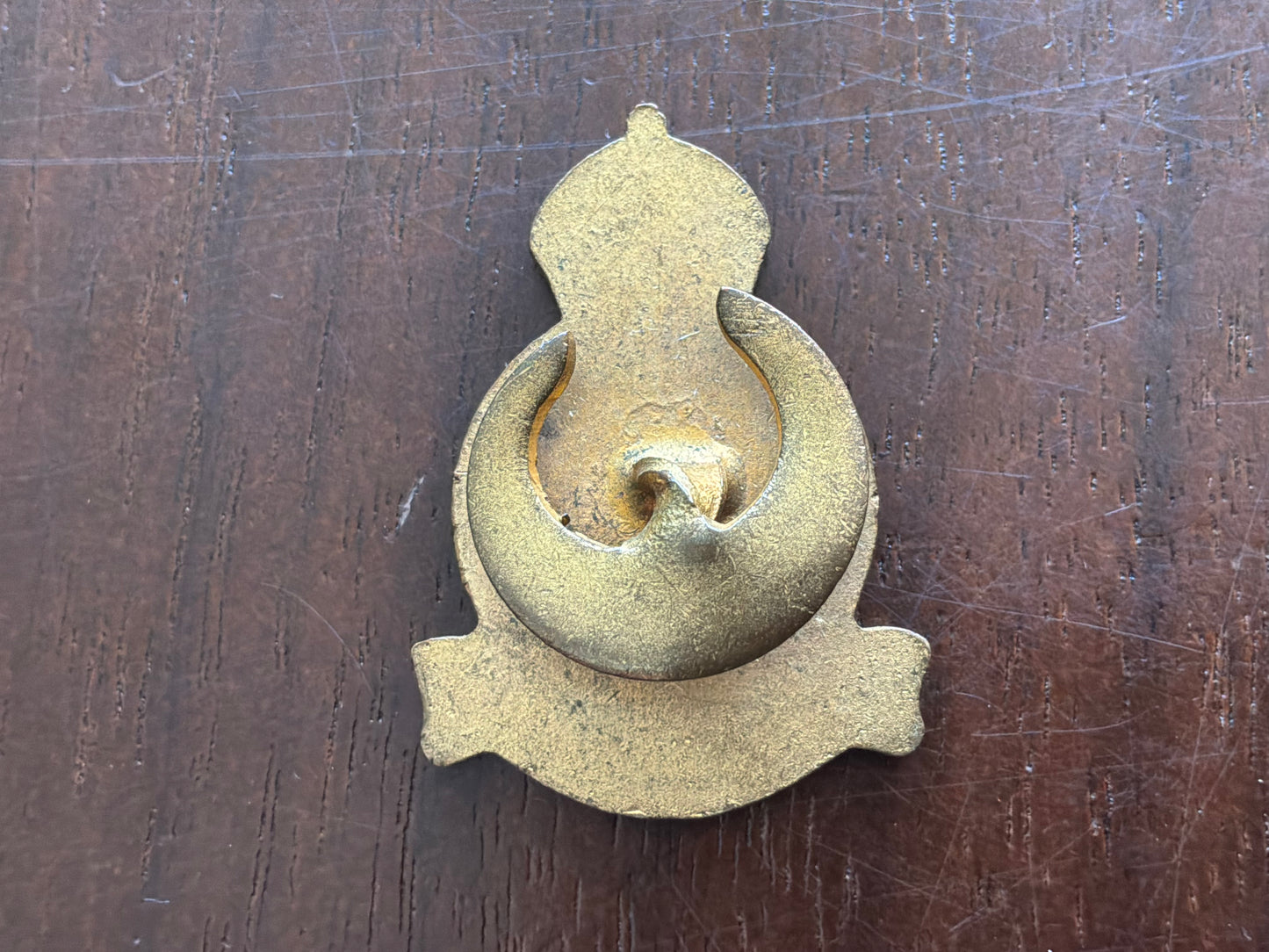
∙ Form: Gilt and enamel, pin-back, hollow-struck reverse. This is a civilian-pattern sweetheart/lapel badge rather than a uniform insignia — sold or given to personnel, families, and association members.
The unit
No. 38 MU was formed at Llandow on 1 April 1940 and disbanded on 15 March 1957. It served within No. 41 Group, RAF Maintenance Command — the group responsible for aircraft (as distinct from armament/fuel or repair/salvage groups).
RAF Llandow sits in the Vale of Glamorgan, South Wales — hence the Welsh dragon and Welsh-language motto. Many civilians were employed at the Unit from 1940 to 1957 , which was typical of the larger MUs.
What they did
38 MU was an Aircraft Storage Unit (ASU) — one of the cornerstone roles in 41 Group. Their job was to:
∙ Receive new aircraft direct from manufacturers (often flown in by Air Transport Auxiliary pilots, including the famous women ATA ferry pilots).
∙ Prepare, modify, and store them in flyable condition until operational squadrons needed them.
∙ Issue aircraft out to front-line squadrons and operational training units, and take back time-expired or damaged airframes for refurbishment or scrapping.
Llandow handled enormous throughput during WWII — Spitfires, Mosquitoes, and later jets like Vampires and Meteors all passed through. A surviving group photograph from c.1953 shows a Mosquito on the apron , consistent with the type still being processed through the unit into the early 1950s. After the war 38 MU became a major disposal and storage centre for surplus aircraft as the RAF drew down.
Dating
Share