Gradia Militaria
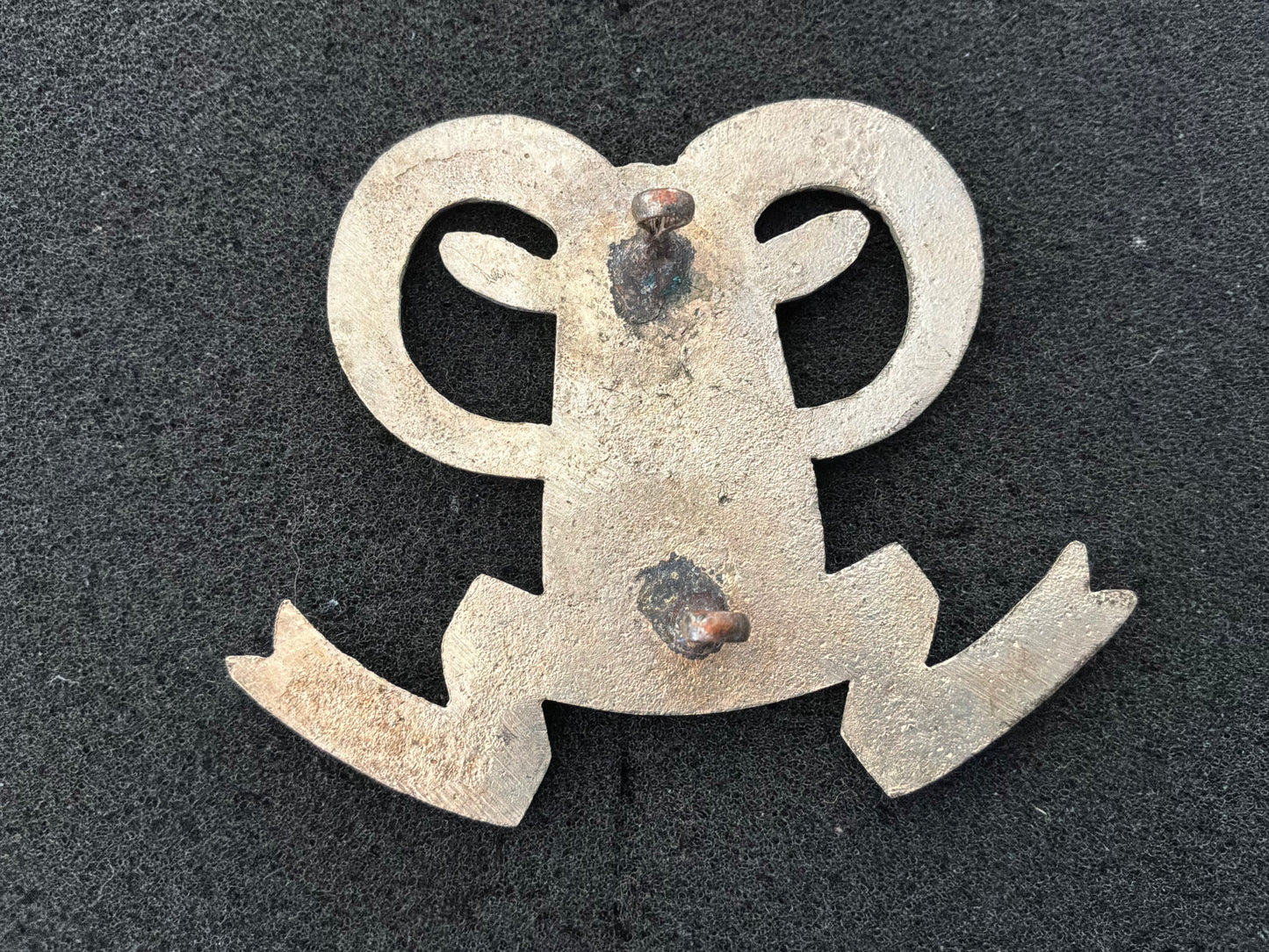
The South Waziristan Scouts, large cap badge at 50mm x 60mm
The South Waziristan Scouts, large cap badge at 50mm x 60mm
SKU:15.4.26 (8)
Couldn't load pickup availability
The South Waziristan Scouts
The South Waziristan Scouts were founded in 1900 and replaced the earlier South Waziristan Militia, being similar in structure to the Tochi Scouts.
Based at Jandola, the unit consisted of two infantry battalions and a small force of mounted infantry. Their primary responsibility was to occupy dominant features along British communication lines — especially those points which, if taken by hostile tribes, would hinder the regular Army’s movement in the Waziristan Agency.
During the Waziristan operations of 1936–1940, the combined Tochi and South Waziristan Scouts — around 5,000 strong — proved a valuable adjunct to the Army, carrying out operations independently and in cooperation with regulars. Their speed, mobility, light equipment and local knowledge enabled them to carry out advance guard duties, protect the flanks of columns, threaten enemy flanks and rear, and conduct raids with far greater ease than heavily encumbered regular troops.
Officers were seconded from the Indian Army through a stringent selection process — it was described as being rather like joining a very small, very exclusive club. Most Scout officers were colourful eccentrics; free spirits and individualists who bonded well with their locally recruited troops and enjoyed the respect of their adversaries.
The Badge
The badge depicts the head of a urial ram — a wild sheep of Western Asia — with a scroll below bearing the unit title “South Waziristan Scouts.” The urial was native to the hills of Waziristan and a natural choice of emblem for a unit recruited from and operating in that terrain.
Your badge has two copper lugs on the reverse, which is consistent with original examples of this cast white metal badge. The notable size — 50mm × 60mm — is on the larger end for Indian frontier badges, suggesting this may be an early or field-made example rather than a later standardised issue.
Share