Gradia Militaria
WW1 Bowker & Ball War Worker Mufti badge.
WW1 Bowker & Ball War Worker Mufti badge.
SKU:May26-60
Couldn't load pickup availability
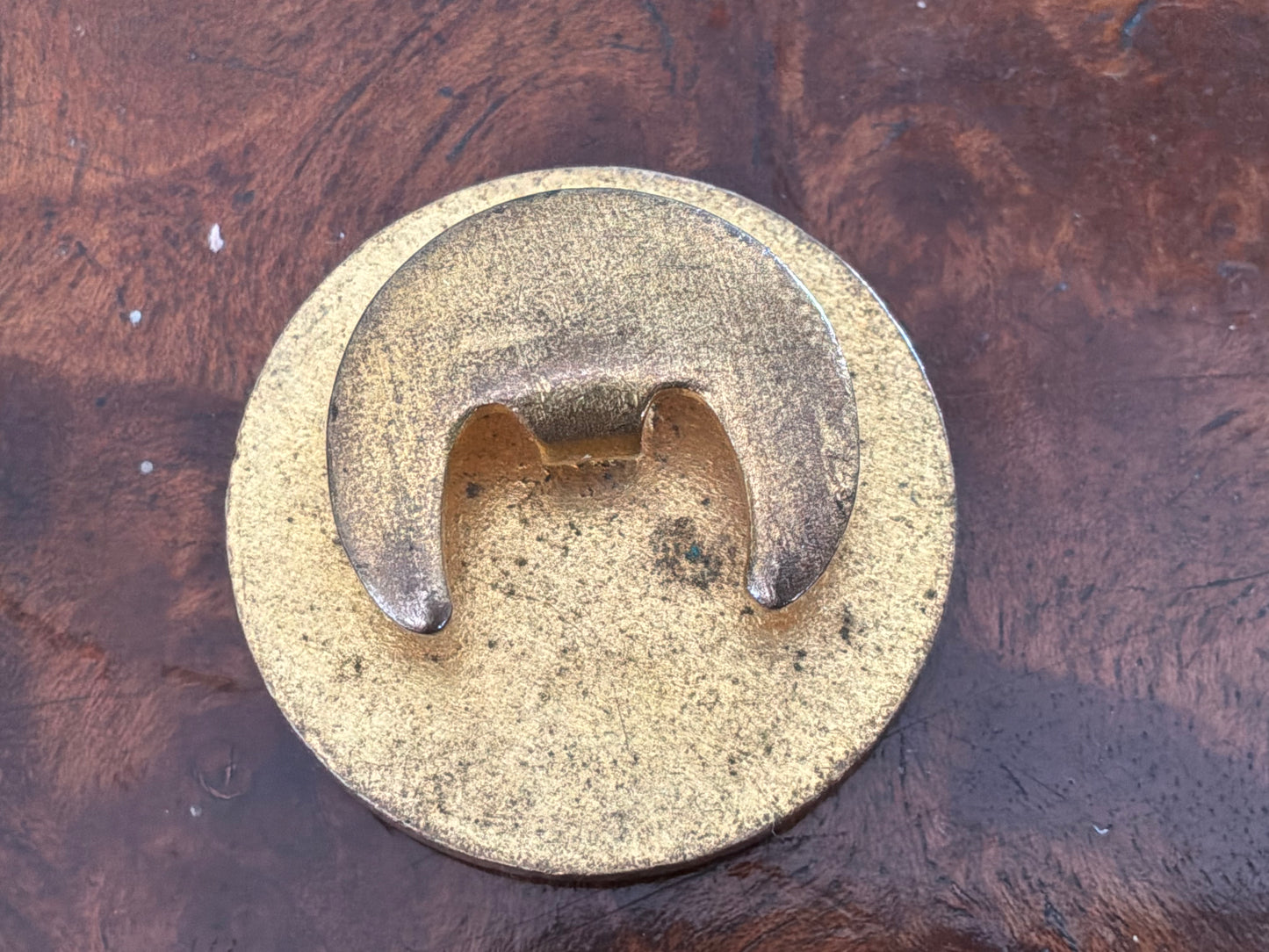
Very rare coloured enamel on gilded brass Mufti badge.
Bowker & Ball operated Victoria Mill at Bank Top, Oldham, and were listed in the 1891 Cotton Mills directory as cotton spinners with 10,000 spindles. They were a modest-to-mid-sized Oldham spinning firm, part of the dense concentration of cotton mills that made that town one of the most intensively industrialised places on earth in the Victorian and Edwardian era. The National Archives holds records for Bowker & Ball Ltd as cotton spinners, confirming their incorporation as a limited company.
This is a company-issued civilian “On War Service” badge, a privately produced variant rather than a government-issue type. Several badges were officially produced and distributed nationally, but many more were produced privately by employing companies to support their employees.
Before conscription was introduced in 1916, the army relied on voluntary recruitment, and it was assumed by many that a man not in uniform was avoiding joining up and was therefore often accused of shirking his duty. The famous white feather campaign saw men not in uniform presented with a white feather as a symbol of cowardice. The official badges were intended to prove that the wearer was doing their duty to their country in a different way, engaged in work that was vital to the war effort.
Such badges were also worn by female shift workers, and the badge could give fare concessions and priority when using public transport.
After conscription was introduced, the need for these badges faded alongside the white feather campaign. However, many continued to be worn throughout the war, especially by female shift workers for whom the badge could indicate that there was nothing disreputable about these ladies travelling alone at night.
Share