Gradia Militaria
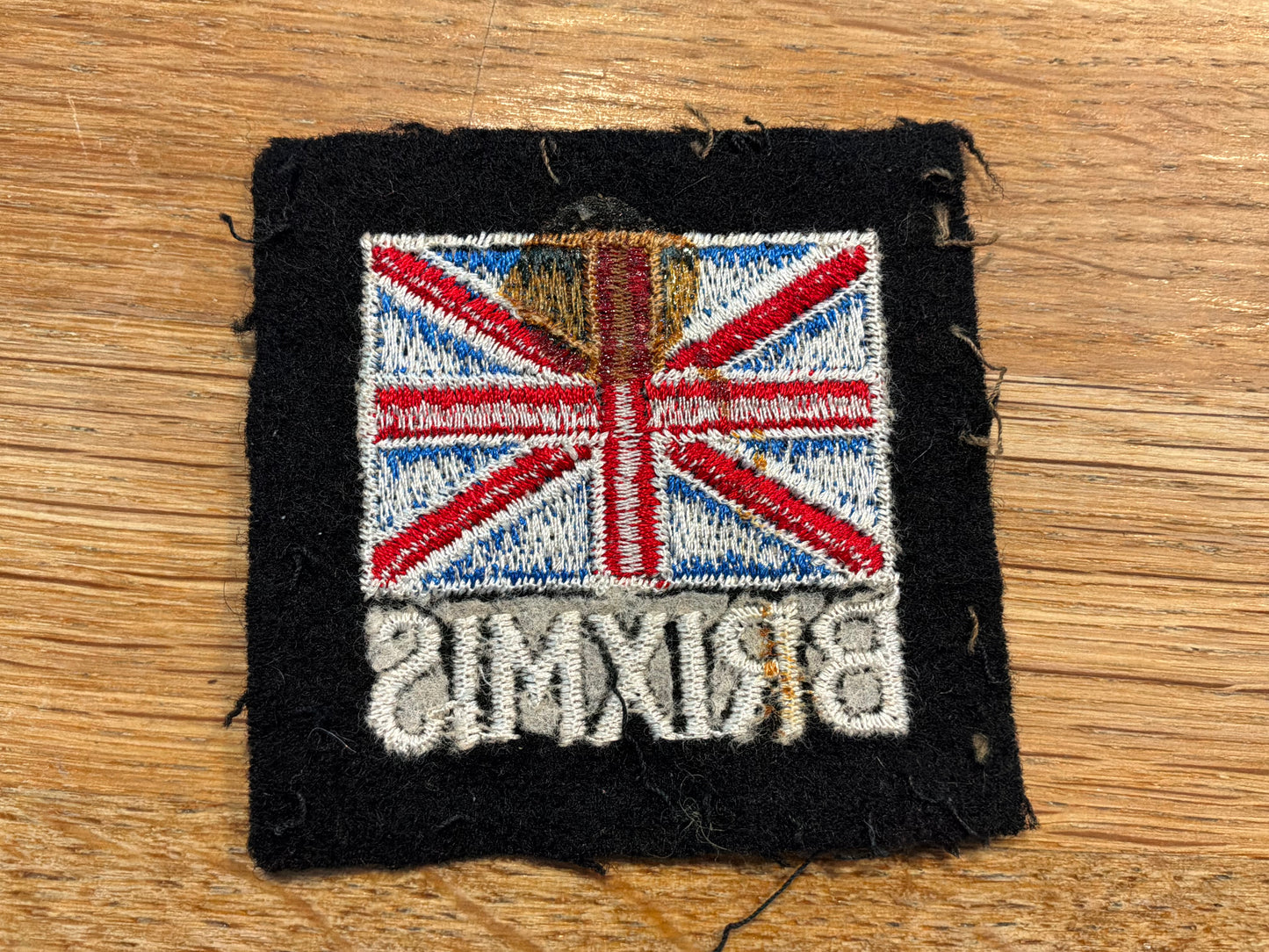
BRIXMIS, British Commanders’-in-Chief Mission to the Soviet Forces in Germany formation sign.
BRIXMIS, British Commanders’-in-Chief Mission to the Soviet Forces in Germany formation sign.
SKU:10199
Couldn't load pickup availability
Rare cloth formation sign, removed from uniform.
What was BRIXMIS
BRIXMIS stood for the British Commanders’-in-Chief Mission to the Soviet Forces in Germany. It was formed up in Berlin on 17 July 1946, just ten months after WWII ended, growing out of a reciprocal agreement between Britain and the Soviet Union to exchange military liaison missions in each other’s occupation zones.
Officially, its job was simple: maintain liaison between the staffs of the two Commanders-in-Chief and their military governments in their respective zones . In reality, it became one of the most effective Western intelligence-gathering operations of the entire Cold War.
How it operated
The original agreement allowed 11 officers and 20 NCOs Soviet-issued passes granting them freedom of travel throughout the Soviet zone — a huge concession that the mission exploited for decades. Members of the Army, Royal Navy and RAF conducted uniformed liaison activities in marked cars and two Chipmunk light aircraft , ostensibly for aircrew currency, but really for aerial reconnaissance.
Its nominal home was the Mission House in Potsdam, East Germany, though the real headquarters and operations centre were in West Berlin, in London Block at the Olympic Stadium complex . The Soviets even rebuilt the Potsdam house after it was damaged in 1958 anti-British disturbances, complete with reparation money.
The spying side
Crews drove out from Berlin into East Germany to photograph and catalogue Soviet and East German military hardware, exercises, and bases, and even recovered discarded Soviet equipment for analysis. It ran in parallel with the American (USMLM) and French (FMLM) equivalents, while the Soviets ran their own mission, SOXMIS, in the British zone.
How long it lasted
Remarkably, BRIXMIS remained operating until October 1990 and then covertly until 1993 — long after the Berlin Wall fell in November 1989 , making it one of the last operational relics of the Cold War standoff in Berlin.
Share