1
/
of
8
Gradia Militaria
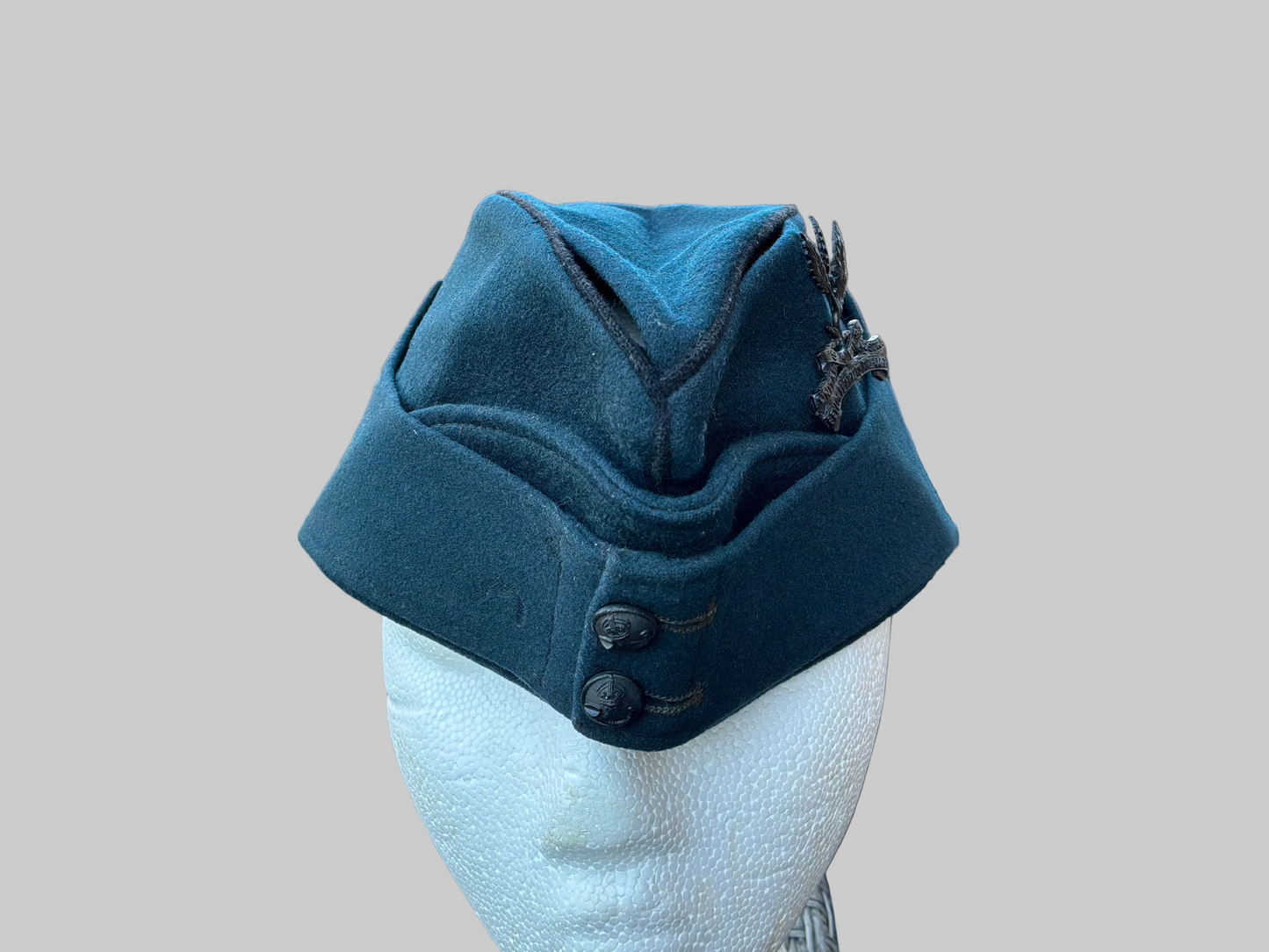
Ceylon Planters Rifle Corps field service cap
Ceylon Planters Rifle Corps field service cap
SKU:
Regular price
£145.00
Regular price
Sale price
£145.00
Unit price
/
per
Couldn't load pickup availability
Very rare cap in remarkable condition, Rifle green colours, no size but seems to be an average size, interestingly due to the heat it has some cleverly built in opening vents at the very top on the hat.
The Ceylon Planters Rifle Corps.
- Founded in 1900 with its headquarters at Kandy, its officers and men were Europeans working as tea and rubber planters in Ceylon's central highlands. Its front-line nickname was apparently the "Tea Leaves", which is what the three leaves on the badge show.
- It sent a detachment to the Second Boer War, earning the battle honour "South Africa 1900".
- In 1914 it sent 237 men to Egypt, and in December they joined the new ANZAC corps, attached to the Wellington Battalion. The remaining 70 or so members landed at Anzac Cove on 25 April 1915. General Birdwood made them his personal escort.
- It also supplied an estimated 700 volunteers who were commissioned as officers in the British and Indian armies.
- The unit was mobilised again in 1939, and disbanded on 11 April 1949 after Ceylon's independence. It was affiliated to the Rifle Brigade, which explains the rifle green and the dark badge.
The cap
- Bristol Museums holds an almost identical one: a fore and aft hat worn by a Ceylon Civil Service member serving in the CPRC, with black lining, two black crowned bugle buttons at the front, and the same three-leaf "Unitas salus nostra" badge. Theirs is quite moth eaten, which makes this one stand out.
- Hobson & Sons were uniform contractors to the army, volunteers and police from 1850, and moved to Essex in the 1930s. A dealer lists a Gurkha cap with the same Hobson & Sons (London) Ltd label dated 1940. That label style, plus the coloured side cap pattern, points to the late 1930s to 1940s, so likely the corps' Second World War era. That dating is my reading, not a confirmed fact.
The name
The label looks like "P. Stevenson", with a second word that could be a place, possibly "Badulla" (a planting district), but I'm guessing at at what it says.
Share