1
/
of
2
Gradia Militaria
Pre 1916 Prince Line 22mm gilded brass button by Firmin
Pre 1916 Prince Line 22mm gilded brass button by Firmin
SKU:10138
Regular price
£10.00
Regular price
Sale price
£10.00
Unit price
/
per
Couldn't load pickup availability
original uniform button from the Prince Line, a prominent British shipping company.
Button Details
- Front Design: Features the Prince Line's house flag—a swallowtail pennant bearing a distinct Prince of Wales's feathers emblem (often mistaken for a fleur-de-lis)—set against a horizontally lined background and enclosed by a rope-twist border.
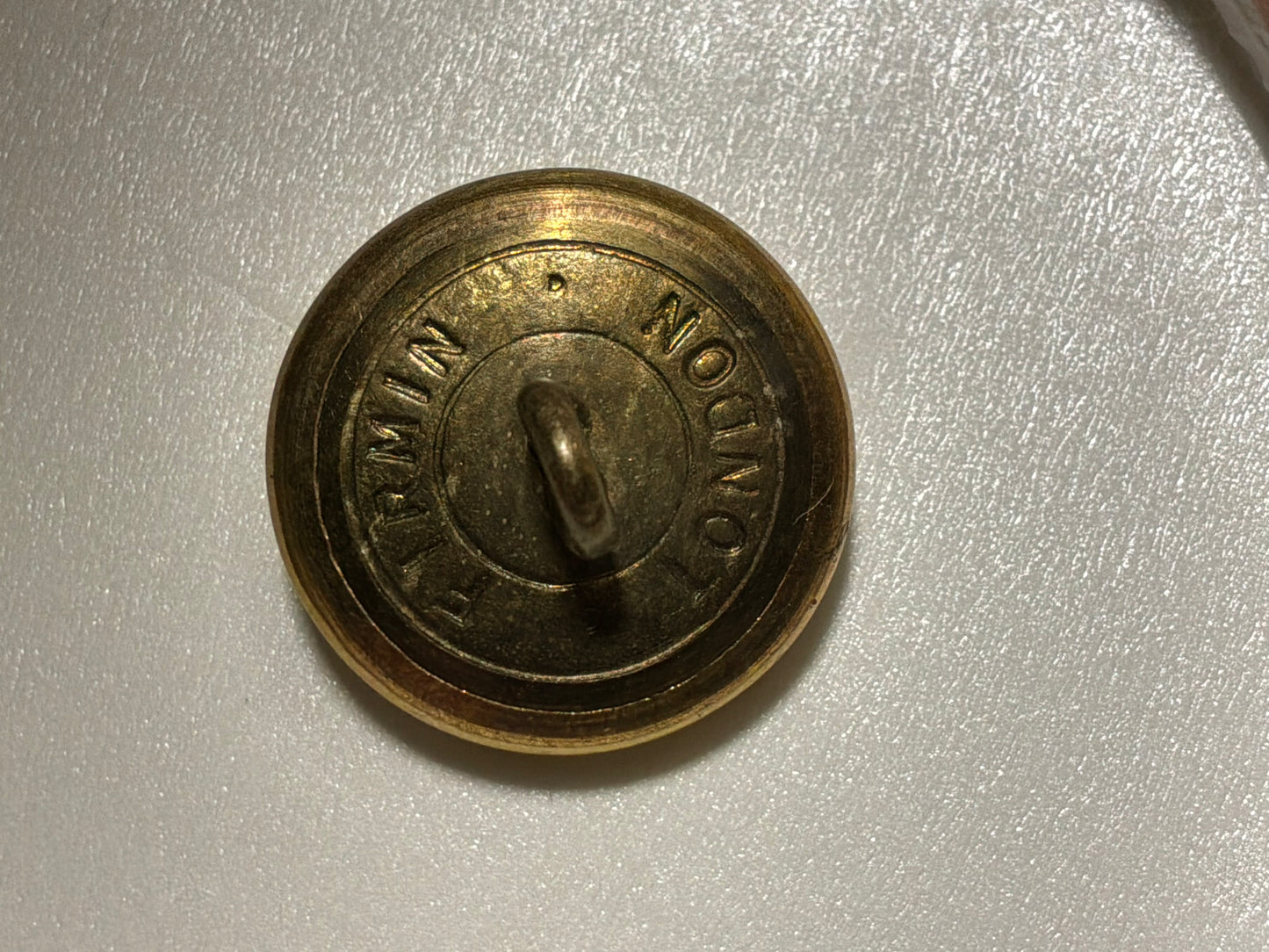
- Backmark: Stamped "FIRMIN · LONDON", confirming it was manufactured by Firmin & Sons, one of the oldest and most prestigious button makers in England.
Historical Context
Founded by James Knott in Newcastle upon Tyne in 1881, the Prince Line grew into one of the world's largest shipping lines before being bought by Furness, Withy & Co. in 1916. Buttons like this were worn on the uniforms of the ship's officers and crew members throughout the late 19th and mid-20th centuries.
The Backmark & Dating
- The Manufacturer: Firmin & Sons (founded in 1677) is England's oldest button maker.
- The Font Style: The simple, clean, sans-serif block lettering of "FIRMIN · LONDON" stamped into the brass reverse is a classic style used by the foundry around the turn of the 20th century. Earlier Victorian versions typically included "& SONS" or used serifed, elaborate fonts.
- Construction: This is a two-piece "gilt" brass button with a separate domed front shell and a solid backplate featuring a braised wire shank loop.
The Emblem: Why the Feathers?
- The emblem inside the swallowtail flag shows the three ostrich feathers emerging from a gold coronet. This is the traditional heraldic badge of the Prince of Wales.
- Shipping lines frequently utilized royal, regional, or national symbols to cultivate an aura of prestige, power, and reliability for their fleets.
Life On Board the Prince Line
- Who Wore It: This type of button was worn on the formal double-breasted navy tunics and cuff plackets of the ship’s Deck Officers and Chief Engineers.
- The Fleet Identity: The Prince Line was famous for naming every single ship in its fleet with a "Prince" suffix (e.g., Saxon Prince, Highland Prince, Black Prince). The ships themselves were striking, painted with distinct slate-grey hulls and bold black-and-red funnels.
- Global Trade Routes: While they carried some passengers, these ships were primarily cargo liners. Officers wearing these buttons traveled historic global trade routes, moving cotton and grain from the Mediterranean to Manchester, or embarking on massive round-the-world trade voyages via the Panama Canal.
- Wartime Legacy: The era this button originates from was highly volatile. When World War I broke out, the Prince Line had 45 steamers. They lost 16 of them to enemy U-boats and mines. The owner, Sir James Knott, was so devastated by the war—losing three of his own sons to the fighting—that he sold the entire multi-ship empire to Furness, Withy & Co. in 1916.
Share