Gradia Militaria
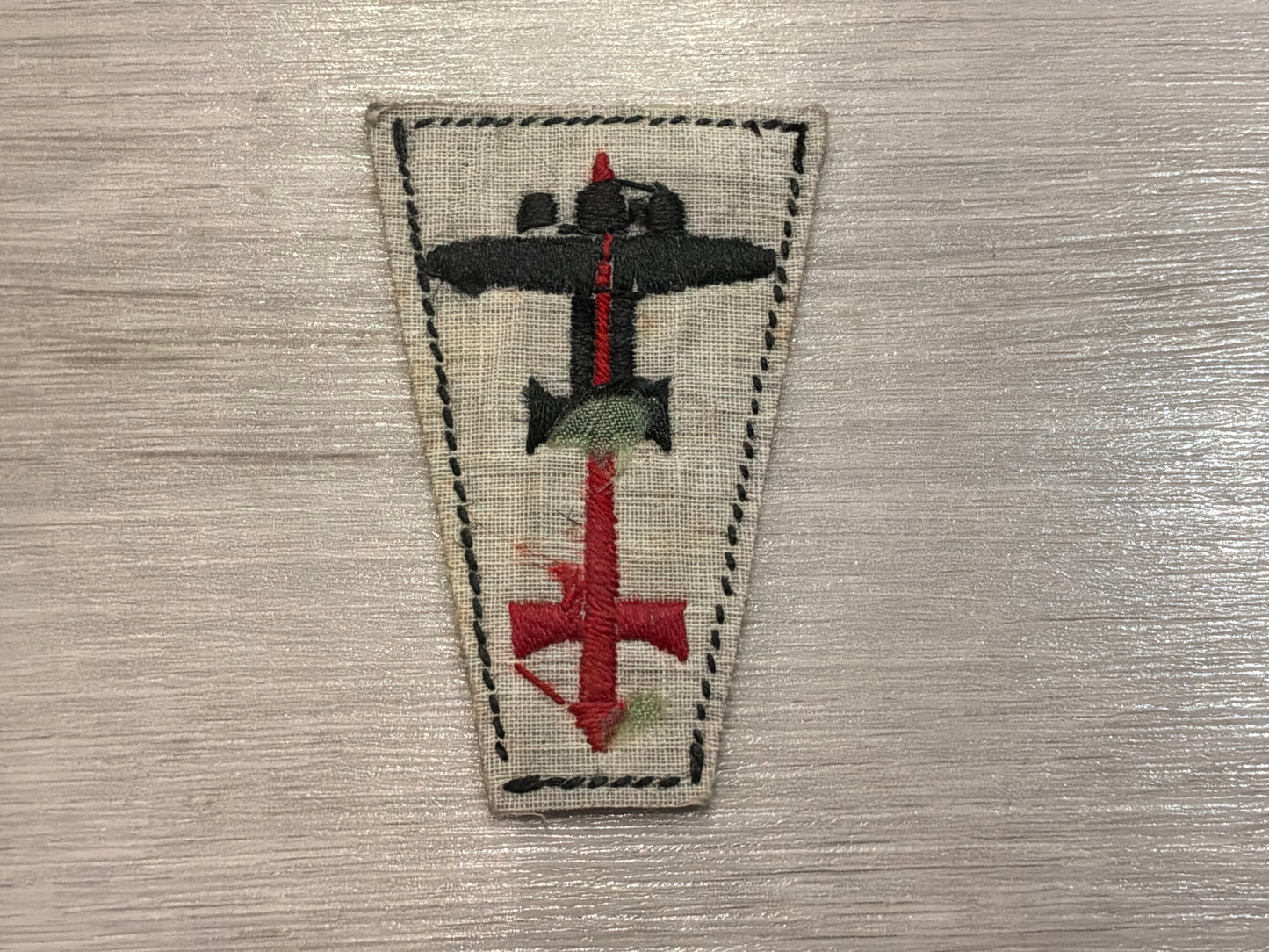
WW2 1st Anti-Aircraft Division (variation)
WW2 1st Anti-Aircraft Division (variation)
SKU:
Couldn't load pickup availability
1st Anti-Aircraft Division, the formation that defended London through the Battle of Britain and the Blitz, the grey second pattern .
The 1st Anti-Aircraft Division was formed on 15 December 1935 from Territorials from London and the Home Counties, and was responsible for the area south-east of a line from the Wash to the Solent. It answered to London District but was under the operational control of RAF Fighter Command, commanding the growing number of Territorial Army gun and searchlight units around London. Its headquarters was at Hillingdon House, Uxbridge, and notable commanders included Maj-Gen Sir Frederick Pile (1937 to 1939) and Maj-Gen Robert Whittaker (1940 to 1941).
In 1938 it became a purely London Territorial formation responsible for the anti-aircraft defence of the capital, and it fought through the 1940 to 1941 attacks on the city. It was the first anti-aircraft formation to use radar for gun control. The scale of its build-up was remarkable. In June 1940, after Dunkirk, it had 45 4.5-inch, 39 3.7-inch and 26 3-inch heavy guns. By 30 September, when the Luftwaffe had switched to night raids on London, it had 233 heavy guns, 60 light guns, 161 light machine guns and 242 searchlights covering the London Inner Artillery Zone.
All anti-aircraft divisions were disbanded on 1 October 1942, after which their units wore the Anti-Aircraft Command sign.
The formation sign
The division also had the most variations of any formation. There were three official designs: light blue with a narrow inner border, grey with a wider outer border, and khaki with no border. Current research suggests blue was the first pattern, grey the second (1940) and khaki a 1941 austerity issue, and all three may have been worn side by side until disbandment in October 1942.
Share