Gradia Militaria
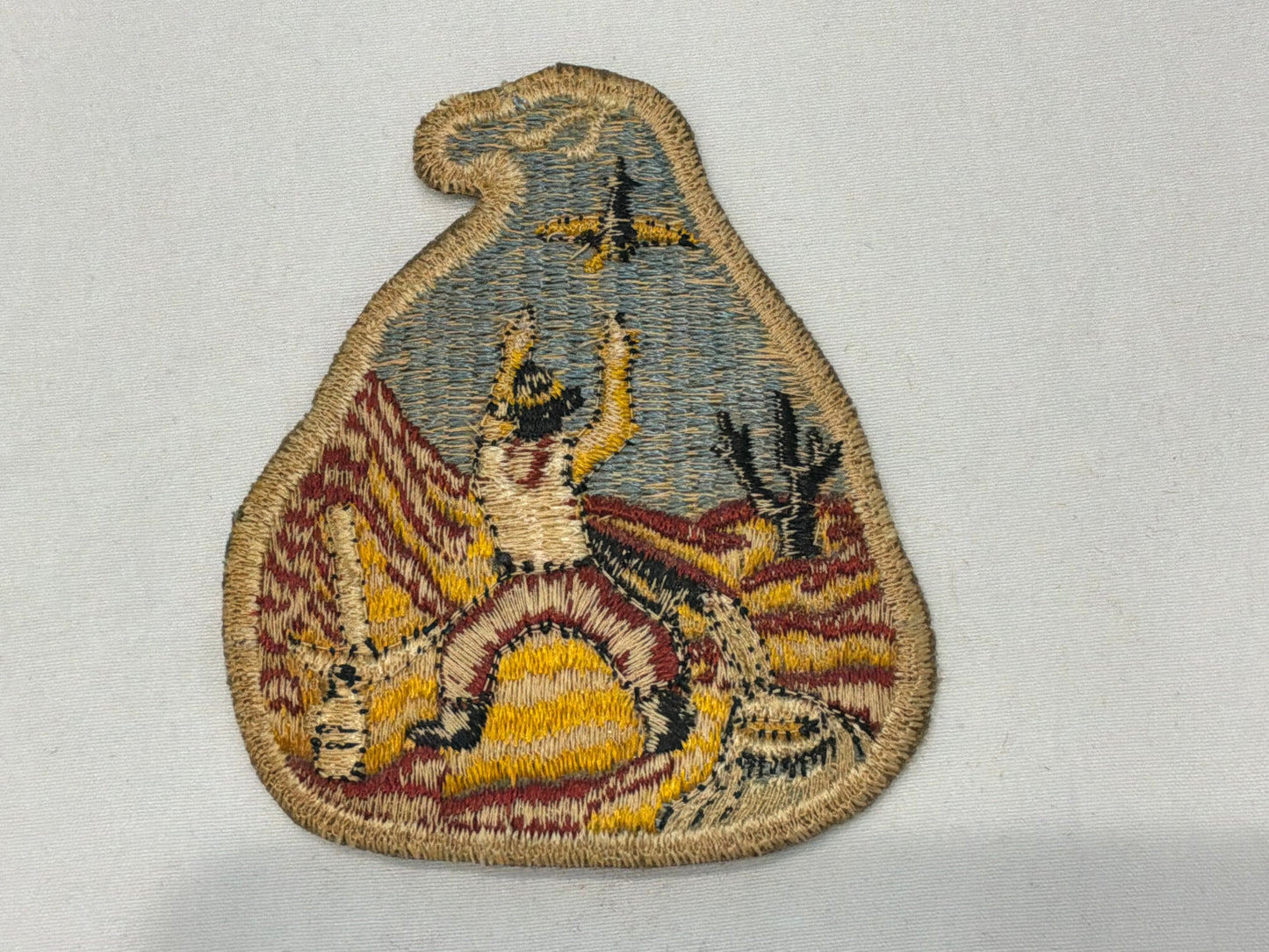
WW2 early cut edge U.S.Army 49th Antiaircraft Artillery Brigade.
WW2 early cut edge U.S.Army 49th Antiaircraft Artillery Brigade.
SKU:10130
Couldn't load pickup availability
WW2 early cut edge U.S.Army 49th Antiaircraft Artillery Brigade in great condition;
A D-Day Formation Sign
Tucked among the well-known insignia of the airborne, infantry, and armored divisions that stormed Normandy is a far less commonly recognised patch: a cartoon gunslinger in a wide-brimmed hat, six-shooters blazing at a strafing aircraft overhead, set against a red-and-gold desert scene with a saguaro cactus. This is the shoulder sleeve insignia of the United States Army’s 49th Antiaircraft Artillery Brigade, one of the formations that protected the invasion beaches from the air on 6 June 1944.
A Brigade Built for the Beaches
By the time of the Normandy landings, the 49th AAA Brigade had grown into a substantial command. On D-Day itself it controlled four antiaircraft artillery groups, comprising thirteen battalions in total: three medium battalions equipped with towed 90mm guns, six automatic weapons battalions armed with towed 40mm guns and quadruple .50-calibre machine guns, two self-propelled automatic weapons battalions mounting 37mm guns on halftracks, one barrage balloon battalion, and one battalion provisionally organised for the machine-gun role, earmarked to go ashore on Omaha Beach in the third assault wave. A fifth group, the 11th, was detached for the operation to serve directly under VII Corps.
This organisation reflected a broader reform of American antiaircraft artillery two years earlier. In 1942 the branch had abandoned the old regimental structure in favour of independent battalions grouped under AA artillery groups, with brigade headquarters retained to command several groups at once when they were massed under a corps, as they were for the invasion. Although reorganised, the units remained affiliated with the Coast Artillery Corps, from which American antiaircraft artillery had originally been drawn, and their flags and guidons kept the branch’s traditional scarlet and yellow colours.
The Job: Keeping the Skies Over the Beachhead Clear
The brigade’s task on and after D-Day was straightforward in concept and gruelling in practice: get guns ashore fast enough to protect the vulnerable mass of men, vehicles, and supplies crowding the beachhead from the Luftwaffe. Antiaircraft units training for the landings, like the 452nd AAA Battalion (which came ashore in Normandy later that June), typically spent the weeks before the invasion held in England defending supply depots before crossing the Channel themselves. Once ashore, the guns of formations such as the 49th’s constituent battalions were among the first heavy weapons landed behind the assault infantry, providing a defensive umbrella over the beach exits, supply dumps, and, later, the vital port facilities the Allies fought to capture and hold.
Share