Gradia Militaria
WW2 The National Pigeon Service enamel lapel badge
WW2 The National Pigeon Service enamel lapel badge
SKU:
Couldn't load pickup availability
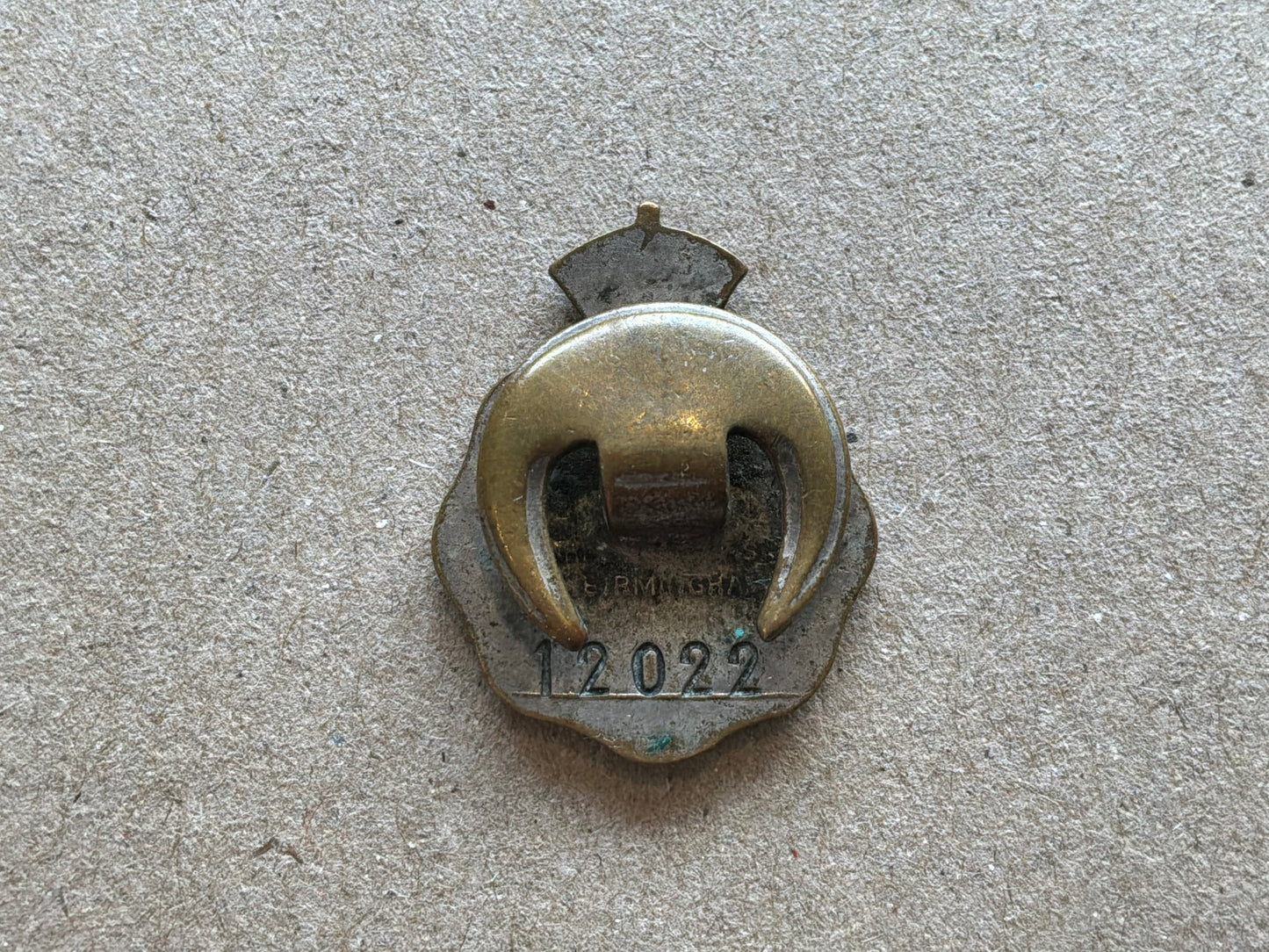
These lapel badges were issued to enrolled members of the National Pigeon Service, each with its own number. Keepers were issued a numbered badge, which makes every surviving example a link to one individual fancier who gave their birds to the war effort. The reverse has its original buttonhole fitting, a Birmingham maker's mark and the issue number 12022. The enamel shows crazing and losses from honest wear, the sign of a badge that was worn with pride.
The National Pigeon Service: Britain's secret winged army
When war came in 1939, Britain turned to an unlikely ally: the nation's pigeon fanciers. A committee appointed by the Secretary of State for Air, Sir Kingsley Wood, ran the new service under the Air Ministry, and membership was open to fanciers who bred and trained homing pigeons and kept lofts of at least 20 birds of approved quality. The idea came from a family with deep roots in the hobby. Lieutenant Colonel Alfred Henry Osman had organised the first Pigeon Service, and his son William carried on that legacy.
Even the King took part. The royal racing loft at Sandringham supplied the first pigeons for active service, and newspapers of December 1939 reported that the King had asked to be supplied with an official National Pigeon Service badge.
What did they do?
Radios could fail, be jammed or be overheard. A pigeon could not. Between 1939 and 1945, the fanciers of the NPS gave more than 200,000 young pigeons to the services, and the birds went to the RAF, the Army and the intelligence services. Bomber and Coastal Command crews carried pigeons in waterproof boxes, so that if they came down at sea a bird could carry their position home.
Share